.webp)
* All product/brand names, logos, and trademarks are property of their respective owners.
From digital assistants that schedule your meetings to algorithms that can write stories or detect diseases faster than doctors, machine intelligence is no longer science fiction—it’s our present. And it’s moving fast. But what exactly is machine intelligence? In simple terms, it’s the next stage in the evolution of artificial intelligence (AI) and machine learning (ML). It’s not just about machines “doing tasks” anymore. It’s about them thinking, adapting, and even collaborating with humans in ways that were unthinkable a few years ago. Whether it's a chatbot answering customer queries with nuance, or an AI system predicting financial trends across global markets, machine intelligence is quietly reshaping every part of our world.
As we step into 2026 and beyond, we're witnessing a dramatic shift—not just in how intelligent machines work, but in what they can become. We're entering an age where AI systems are more autonomous, more context-aware, and more deeply embedded in our daily lives. This isn’t just about technology—it’s about culture, society, and the way we live, work, and connect. So, what are the key trends that will define this future? In this blog, we’ll break down the top 10 machine intelligence trends that are set to reshape industries, redefine how we interact with technology, and challenge us to rethink the boundaries between humans and machines.
To understand where machine intelligence is heading, we need to look at where it started—and how far it’s come in just a few short decades. Once upon a time, artificial intelligence was largely rule-based. Early AI systems followed hard-coded instructions and performed well only in narrow, predictable tasks. These “expert systems” could play chess or diagnose simple medical conditions, but they lacked flexibility, adaptability, and true learning capabilities.
That all changed with the rise of machine learning—and more specifically, deep learning. Instead of being told what to do, machines began to learn from data. Through complex architectures like neural networks, inspired loosely by the human brain, systems could now recognize patterns, make predictions, and even improve over time. We're now entering an era where these systems are becoming not just smart, but strategically intelligent. With advancements in reinforcement learning, transfer learning, and federated learning, AI models can adapt to new environments with minimal retraining, collaborate across devices without centralizing data, and even learn from small datasets.
And then there's the wild card: quantum computing. Still in its infancy, quantum AI promises to take machine intelligence to levels we can barely imagine today. By processing complex probabilities and performing calculations at speeds classical computers can't match, quantum-powered AI could crack problems in materials science, drug discovery, and global logistics in seconds.
Generative AI is evolving from creating static text or images to generating entire experiences. The rise of multimodal models means AI can now understand and produce across text, voice, images, and even video simultaneously. Imagine describing a scene and having AI instantly generate a video with background music and narration—this is fast becoming a reality.
In education, AI tutors can blend audio, visual, and interactive content for personalized learning. In media, AI helps create full advertising campaigns—from copywriting to visuals. Designers use AI to rapidly prototype user interfaces, animations, and branding elements.
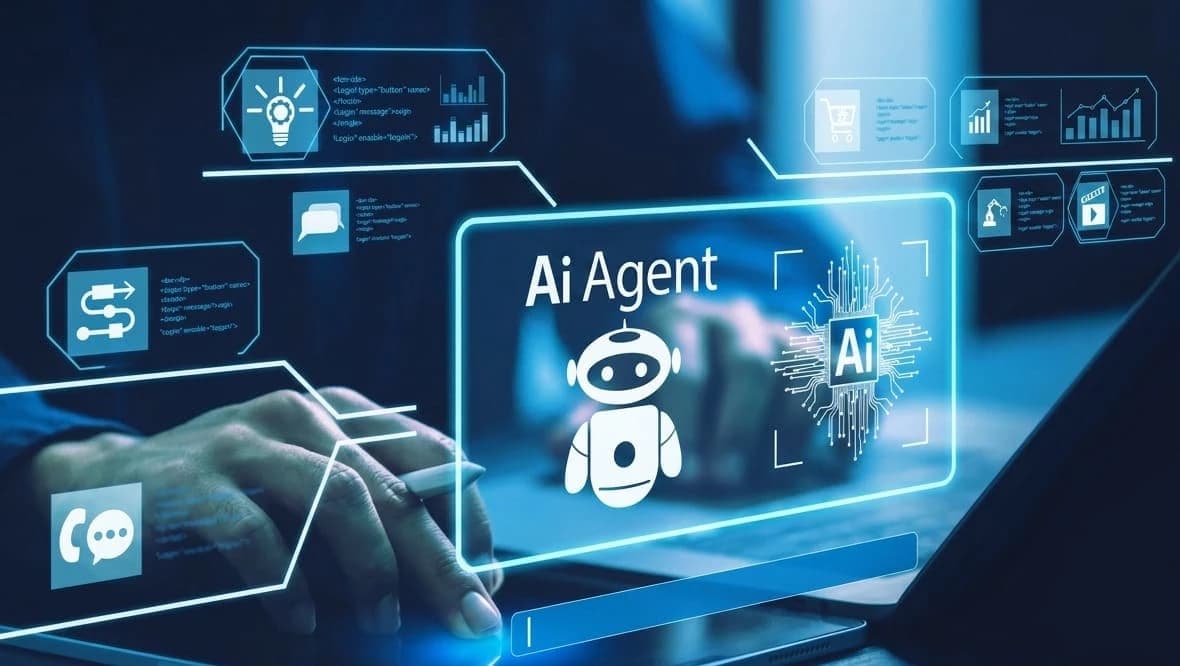
Agentic AI goes beyond responding to prompts. These systems understand goals, plan steps, and execute them autonomously. Tools like Auto-GPT and OpenAI’s Assistant API show how AI agents can complete multi-step tasks without continuous input.
In customer service, AI agents handle entire conversations, book appointments, and resolve issues. In business, agentic workflows automate research, email follow-ups, and project tracking, freeing humans for high-value work.
Edge AI moves processing from cloud servers to devices like smartphones and sensors. This reduces latency, preserves privacy, and enables offline functionality—vital for wearables, smart homes, and autonomous drones.
Processing data locally means AI can respond instantly to environmental changes. It’s crucial for applications like self-driving cars and industrial IoT, where even milliseconds matter.
Governments are pushing for AI regulation. The EU AI Act classifies AI by risk and mandates transparency. The U.S. AI Bill of Rights outlines ethical principles for development.
Tech companies are adopting ethical guidelines, fairness audits, and bias detection tools. Responsible AI is becoming a competitive advantage and a global standard.
As AI makes more critical decisions, users demand to know why. Black-box models offer little insight, leading to mistrust and risk.
Frameworks like LIME and SHAP explain predictions, highlighting which features influenced outcomes. This is vital in healthcare, finance, and law.
AI transforms business strategy with real-time insights and simulations. Predictive models forecast demand, optimize pricing, and personalize customer experiences.
From logistics to finance, industries are adopting AI for fraud detection, supply chain optimization, and strategic planning.
AI helps developers write, debug, and translate code. Tools like GitHub Copilot suggest lines of code, generate tests, and speed up development.
Non-developers can now build apps using AI-powered platforms. This democratizes development and accelerates innovation.
Multilingual AI enables real-time translation across hundreds of languages, making services accessible globally.
Culturally inclusive AI models trained on diverse data reduce bias and enhance relevance for global users.
AI enhances human creativity. Designers, writers, and scientists use AI to explore ideas faster and push creative boundaries.
Human input improves AI over time. Feedback loops are key in refining models and ensuring responsible behavior.
AI leadership is no longer confined to Silicon Valley. China, the U.S., EU, and India are all investing heavily in AI research, policy, and infrastructure.
AI innovation is being driven by global universities, agile startups, and open-source communities. Collaboration across borders is accelerating progress.

Mushraf Baig is a content writer and digital publishing specialist focused on data-driven topics, monetization strategies, and emerging technology trends. With experience creating in-depth, research-backed articles, He helps readers understand complex subjects such as analytics, advertising platforms, and digital growth strategies in clear, practical terms.
When not writing, He explores content optimization techniques, publishing workflows, and ways to improve reader experience through structured, high-quality content.
Artificial Intelligence (AI) and Machine Learning (ML) are no longer just buzzwords — they&rsq
23 January 2026
Learn Machine Learning Without the Overwhelm: Machine learning might sound like something reser
1 December 2025
In today’s rapidly evolving world of artificial intelligence, the question is no longer whethe
22 November 2025
Be the first to share your thoughts
No comments yet. Be the first to comment!
Share your thoughts and join the discussion below.

.webp&w=3840&q=75)