* All product/brand names, logos, and trademarks are property of their respective owners.
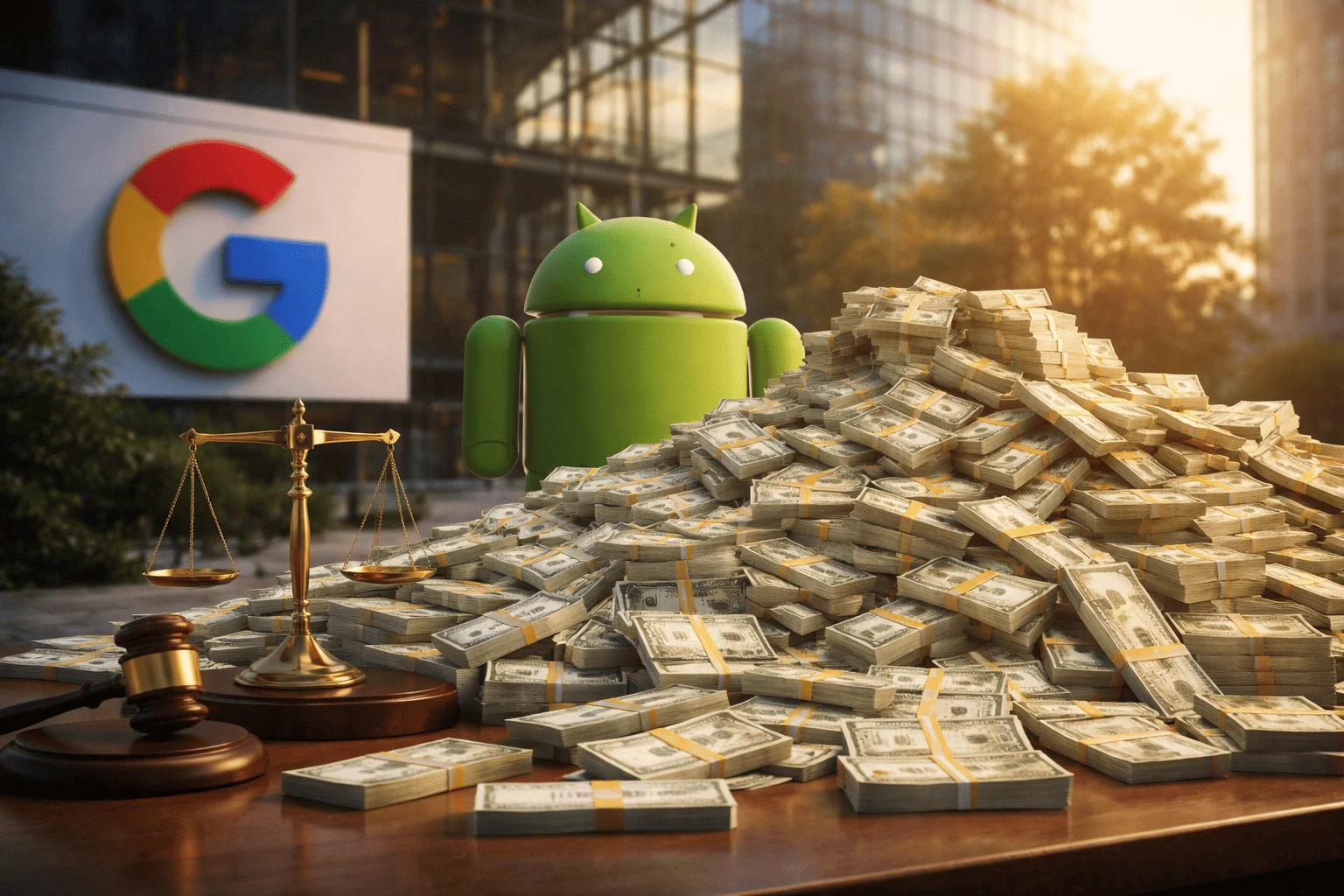
Google’s $135M Android settlement is making headlines, with millions of users potentially eligible for payouts. At first glance, it looks like just another tech lawsuit ending in compensation—but the reality runs deeper.
This case touches on bigger concerns around app store control, competition, and how much power companies like Google really hold. And more importantly, it raises a critical question: Is this just another settlement, or a sign that Big Tech is finally facing serious global pressure?

A report by FOX 29 highlights that eligible Android users could receive small payouts as part of the $135 million settlement.
The Google Android $135M settlement stems from allegations that the company collected user data through Android devices without proper consent. While Google has denied any wrongdoing, it agreed to settle the case to avoid prolonged legal battles.
At its core, the lawsuit focused on concerns around data privacy, user tracking, and how much control Google has over the Android ecosystem.
At a glance, this may look like just another payout case—but it actually ties into a much larger pattern of legal pressure on Google.
The settlement is expected to benefit Android users who were affected during the period covered by the lawsuit. While exact eligibility details may vary, the general idea is simple: if your data was potentially collected without proper consent, you could qualify for compensation.
However, there’s one catch — the payouts are not expected to be very large.
As news of the settlement spread, reactions online were mixed. While some users were eager to claim their share, others questioned whether the payout was even worth it.
Millions of people who have used an Android phone in recent years could be eligible for a payout from a $135 million settlement with Google.
Jay Dee:
“IDGAD how much it is — ship it! 25 cents, $25, $25 milly… as long as I don’t owe 😬”
Syrita Kay:
“A whole $1.00, are you kidding. 🤦♀️”
Franklin Long:
“Individual payouts are expected to be small (capped at $100), according to The New York Post.”
Rubaman Rubamann:
“How to sign up for this?”
Jaye A. Dandy:
“Receiving the email is the first step.”
While the payout may grab attention, it’s only one part of the story. The bigger issue lies in why this settlement happened in the first place—and what it signals for the future of Big Tech.
Google agreed to the $135M Android settlement without admitting wrongdoing, which is a common move in cases like this. For a company of Google’s size, settling can be a faster and safer option than dragging a case through years of court proceedings.
There are several likely reasons behind that decision.
Court cases involving major tech companies can take years, generate constant media coverage, and open the door to more damaging findings. By settling, Google can close this case without the uncertainty of a final court ruling.
Even when a company believes it can defend itself, going to trial carries risk. A judge or jury could have led to:
Cases involving user data and consent can damage trust. Settling allows Google to move forward while limiting more headlines around privacy concerns.
A settlement gives Google more control over the situation than a courtroom loss would. It can manage the financial impact, avoid setting a harsher legal precedent, and contain the reputational fallout.
This is what makes the case more interesting than the payout itself. The money matters, but the strategy behind the settlement reveals how Big Tech often handles pressure: resolve the case, limit the damage, and avoid a larger shift being forced through the courts.
The Google Android $135M settlement isn’t happening in isolation. It’s part of a much larger global shift where governments are increasingly challenging the power of major tech companies.
Over the past few years, regulators across the world have become more aggressive—and more coordinated—in how they deal with Big Tech.
This is why the $135M settlement matters. On its own, it may seem small—but within this global context, it becomes part of a much bigger story about control, competition, and accountability in the tech industry.
While the Google Android $135M settlement may seem like just another legal case, its impact goes beyond payouts. It could influence how both users and developers experience the Android ecosystem in the future.
In the short term, users may benefit from small financial compensation. But the bigger impact could be more meaningful over time.
Developers have long raised concerns about platform control, especially around app distribution and fees. Cases like this could slowly shift that balance.
What makes this important is that change doesn’t happen overnight. But as more cases like this emerge, they can gradually reshape the ecosystem for both users and developers.
And that leads to the bigger question…
That depends on how you define a turning point.
On one hand, the Google Android $135M settlement adds to a growing list of legal actions against major tech companies. Regulators are paying closer attention, lawsuits are becoming more common, and public patience with platform dominance is clearly wearing thin.
That does suggest a shift.
But there’s another side to it.
The real turning point won’t be a single settlement—it will be when these cases start changing how platforms actually operate.
That is the key issue. A $135 million settlement may generate headlines, but headlines alone do not transform the tech industry. Real change happens when pressure leads to:
So, is this case a turning point? Not by itself. But it may be part of a broader shift that is slowly building momentum against Big Tech’s unchecked power.
Google’s $135M Android settlement may look like a simple payout story on the surface, but it points to something much bigger. It reflects rising concern over data practices, platform control, and the growing willingness of governments to challenge powerful tech companies.
For users, the immediate benefit may be small compensation. For developers and regulators, the bigger issue is whether repeated cases like this will finally force meaningful change.
The real significance of this settlement is not just the money. It is what the case represents in a wider global pattern: Big Tech is being watched more closely, challenged more often, and pushed harder than before.
The question is no longer whether Big Tech will face regulation—it’s how far that regulation will go.

I am Zeenat, an SEO Specialist and Content Writer specializing in on-page and off-page SEO to improve website visibility, user experience, and performance.
I optimize website content, meta elements, and site structure, and implement effective off-page SEO strategies, including link building and authority development. Through keyword research and performance analysis, I drive targeted organic traffic and improve search rankings.
I create high-quality, search-optimized content using data-driven, white-hat SEO practices, focused on delivering sustainable, long-term growth and improved online visibility.
White-collar work is no longer protected from automation just because it happens behind a laptop ins
1 June 2026
Flagship smartphones look and feel incredible—but their price tags don’t always make sen
1 May 2026
Apple’s next major software update, iOS 27, is already generating buzz across the tech world&m
21 April 2026
Be the first to share your thoughts
No comments yet. Be the first to comment!
Share your thoughts and join the discussion below.