* All product/brand names, logos, and trademarks are property of their respective owners.
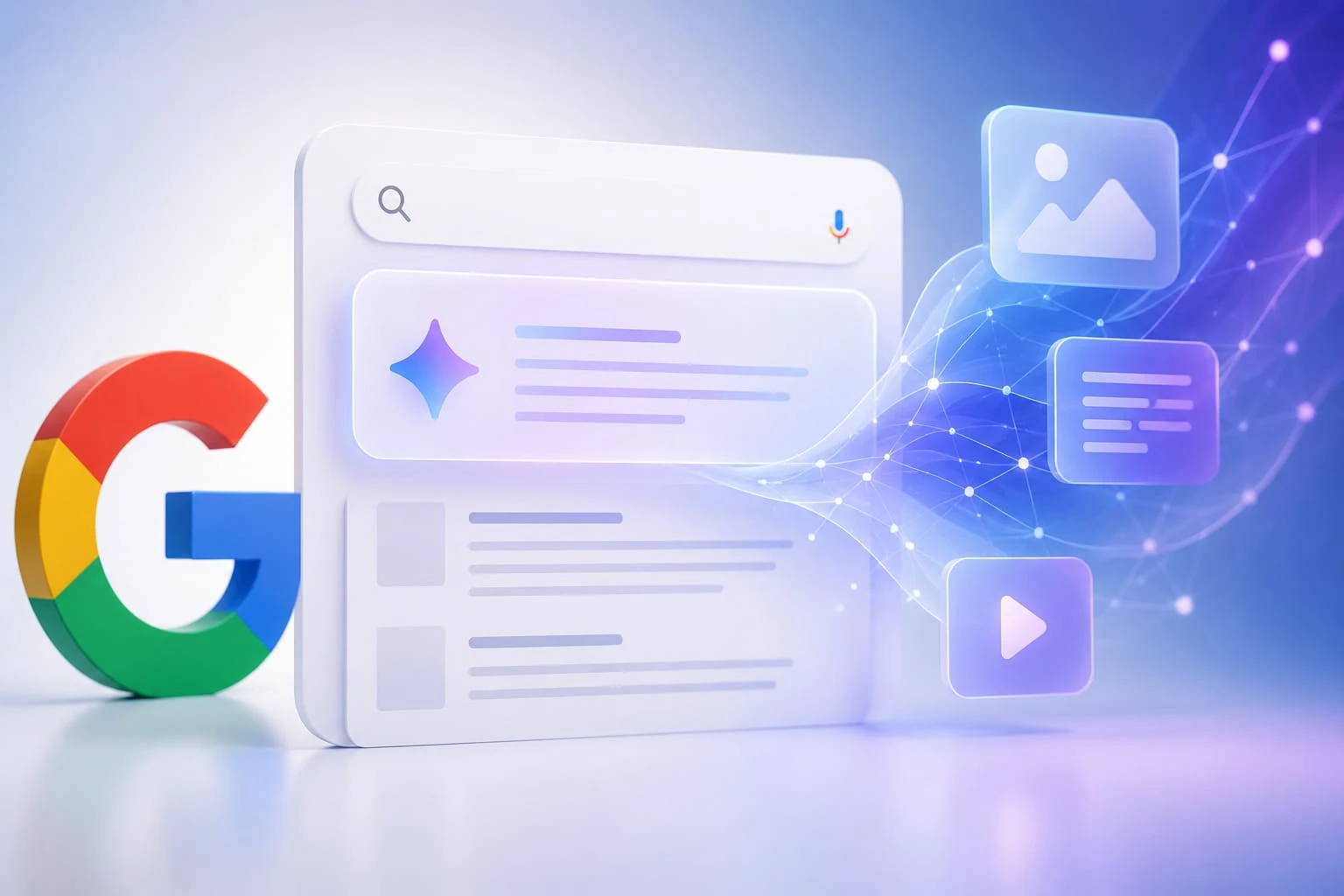
Google Search is moving beyond the familiar page of blue links. With Google Generative UI, search results are starting to feel more like an interactive answer page than a simple directory of websites. Instead of asking users to open several pages, compare information, and build their own answer, Google can now summarize details, suggest follow-up questions, organize results visually, and guide the next step inside the search experience itself.
That shift matters because it changes the relationship between users, websites, brands, and search engines. For users, search may feel faster and more conversational. For businesses and publishers, visibility may depend less on ranking alone and more on whether Google’s AI can understand, trust, and use their content.
Google Generative UI is the AI-shaped version of the search results page. It does not only show links. It creates a more guided layout that can combine answers, summaries, sources, images, products, local results, and suggested next questions.
Common parts of this experience may include:
The big change is that Google is no longer just helping users find pages. It is helping them complete the search task directly.
| Traditional Search | Generative Search |
|---|---|
| Shows ranked website links | Builds AI-generated answer layouts |
| User opens pages manually | User gets a summary first |
| Keywords guide discovery | Context and intent guide results |
| Clicks are central | Answers may come before clicks |
| Websites compete for rankings | Websites compete for trust and inclusion |
The biggest change is control. In traditional search, users choose which result to trust. In generative search, Google often shapes the first answer before the user clicks anything.

Google’s Generative UI is not only changing search results. It is changing the way people interact with information online. In the older model, users often opened multiple tabs, compared articles, and spent time researching before reaching a conclusion. AI-generated search experiences reduce many of those steps.
Users are increasingly likely to:
This creates a shorter search journey. Someone looking for travel tips, product recommendations, or software comparisons may now get a condensed answer before clicking any source.
Search is also becoming more natural. Instead of typing short keyword phrases, users are starting to ask complete questions.
Examples include:
That conversational style gives Google more context. As a result, search results are becoming more predictive and intent-focused rather than heavily dependent on exact keyword matching.
Generative UI reduces friction inside search. Fewer clicks, faster summaries, and guided prompts create a smoother experience for users.
That convenience can change expectations across the web:
For publishers and businesses, the challenge is no longer only getting traffic. The bigger challenge is staying visible in a search experience where Google increasingly controls the first interaction.
Google’s Generative UI could reshape SEO more than any algorithm update from the past decade. Ranking still matters, but visibility now depends more on expertise, trust, and topical relevance than simple keyword placement.
Older SEO strategies focused heavily on exact-match keywords and large volumes of content. Generative search shifts the focus toward topical authority, trustworthy information, and recognizable brands. Websites with stronger expertise and original insights are more likely to stay visible.
AI-generated search relies on extracting information quickly, which makes clear structure and direct answers more important. Pages with concise explanations, descriptive subheadings, and organized formatting are easier for AI systems to interpret and summarize.
Experience, Expertise, Authoritativeness, and Trustworthiness are becoming harder to ignore. Google needs confidence before using content in AI-generated answers, especially for sensitive topics. Expert-written and credible content may gain a stronger advantage.
SEO is slowly moving from ranking pages toward earning trust. Businesses that build authority, publish original insights, and strengthen brand recognition may perform better as AI-driven search continues evolving.

Generative search may create more zero-click searches, especially for simple informational topics.
For publishers, the lesson is clear: content needs a reason to exist beyond answering a basic question.
Businesses cannot rely on older SEO habits alone anymore. Generative UI rewards clarity, authority, and usefulness more than aggressive optimization tactics.
Brands should focus on building deep topical authority, publishing original insights, improving content structure, and answering user questions clearly. Stronger branded searches, expert contributors, and regularly updated content may also become more important as AI-driven search evolves.
Depending entirely on Google traffic may become riskier over time. Businesses that grow email audiences, social visibility, communities, referral traffic, podcasts, or video channels may reduce that risk and build stronger long-term visibility outside search engines.
Generative systems favor content that is easy to interpret and summarize. Short introductions, descriptive headings, concise explanations, comparison tables, and scannable formatting can improve readability for both users and AI systems. The goal is no longer only ranking higher but becoming the most trustworthy and understandable source on a topic.
Google’s role is slowly changing from a search directory into an intelligent assistant. Instead of helping users browse the web step by step, generative interfaces attempt to complete tasks immediately through summarized information and guided conversations.
That shift may reshape digital visibility in several ways:
SEO will still exist, but the focus may look very different from the older era of keyword-heavy optimization. Future visibility may depend on whether AI systems consider a source reliable enough to summarize, recommend, or reference directly.

Google Generative UI represents more than a visual redesign of search. It changes how information is discovered, interpreted, and trusted online. Users are moving toward faster answers, conversational interactions, and AI-guided search experiences. At the same time, businesses and publishers are entering a search environment where authority, clarity, and expertise matter more than ever.
The future of search may involve fewer clicks and more summarized results, but valuable content will still matter. Brands that publish trustworthy insights, structure information clearly, and build real credibility will have a stronger chance of staying visible as search continues evolving.

Nigarish Nadeem is a passionate content writer and guest posting contributor who specializes in creating engaging, SEO-friendly content across multiple niches including technology, business, marketing, lifestyle, and digital trends. With a focus on quality writing and audience value, she helps brands improve their online visibility through informative and well-researched articles.
Over the past few years, SEO has quietly evolved from a technical game into a credibility game. It&r
23 February 2026
In the fast-changing world of SEO, one thing is becoming crystal clear: if your content doesn&r
17 January 2026
Imagine spending hours optimizing your blog, crafting the perfect title, and landing on the first pa
15 January 2026
Be the first to share your thoughts
No comments yet. Be the first to comment!
Share your thoughts and join the discussion below.


(1).webp&w=3840&q=75)
.webp&w=3840&q=75)